
Ghana’s Most Iconic Brands and the Legacy Lessons They Leave Behind

Ghana’s Most Iconic Brands and the Legacy Lessons They Leave Behind
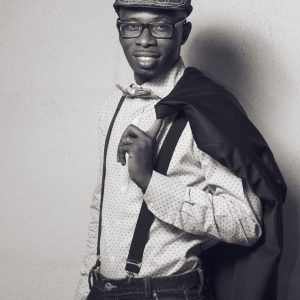 Bernard Kelvin Clive
 “If what you are building now won’t be sustainable or impactful after you are gone, you are not building a legacy.”
So, we are continuing the series on ‘Preparing your Brand and Business for the Next Generation’.
In this article, we will look at some Ghanaian brands that have been in business for over 30 years and are still thriving. I used the GRASS Legacy Framework to review them.
Here are some standout Ghanaian brands that have not only survived the decades but are still thriving today. We begin with one in the Printing and Publishing sector, then some schools that quietly changed the landscape of private education in Accra. I analyzed them using the BKC GRASS Framework from my book Beyond You.
1. Buck Press: A Legacy in Print and a Model of Structure
In the field of printing and publishing, Buck Press stands tall.
Buck Press Limited—founded by Mr. Eric Kofi Buckman in 1980 and operational since May 1, 1987—is a wholly Ghanaian-owned business licensed to provide security printing, general printing, publishing, and stationery. Over its 30+ years, it has become one of Ghana’s top five printing houses, specializing in a wide range of products, including ballot papers, passports, textbooks, and annual reports. Their robust investment in cutting-edge offset, digital, and security printing technology underscores their commitment to global standards.
Applying the GRASS Framework
- G – Grooming
- Buck Press maintains a structured leadership system. Backed by an experienced board led by Prof. Franklyn A. Manu, they also run mentorship and training programmes for talent development.
- R – Records
- Their archive spans decades of high-profile projects—biometric passports, financial statements, textbooks—which underscores their thorough data and project-tracking systems.
- A – Ambition
- Their stated vision is to be a “first-class printing, publishing, and packaging organization” across West Africa. Their publishing arm, launched more recently, focuses on educational and narrative books that aim to enrich Ghanaian literary culture.
- S – Systems
- Buck Press employs fully automated workflows, strict quality assurance, and a disciplined administrative backbone. Their production system is designed to run efficiently, regardless of direct founder input.
- S – Succession
- CEO Eric Kofi Buckman, a trained professional from the London College of Printing, remains involved at the strategy level. Day-to-day operations, however, are handled by the executive team—such as Dr. Francis Nyanin (Executive Director) and heads of various departments—demonstrating a resilient structure and effective succession culture.
Why Buck Press Matters as a Ghanaian Business Case
- Legacy beyond the founder: The business thrives under a capable management team and board, not just its founder.
- Data-driven growth: Over three decades, they’ve built an extensive project portfolio with meticulous operational data.
- Values-led ambition: Their organizational values—Quality, Innovation, Integrity, Accountability, Stewardship, and Teamwork—are codified and reflected in mission statements.
- Systems for continuity: Their standardized workflow systems and professional governance allow the company to scale reliably.
- Succession-ready: With an active CEO and delegation to a strong executive team, they’re a textbook example of succession planning in action.
2. Great Lamptey-Mills Complex School
Established in 1963 by the late Rev. Abraham Samuel Lamptey-Mills, Great Lamptey-Mills Complex School began with just twelve pupils in Accra. Over the years, it’s grown into a renowned institution offering nursery, primary, junior high, and senior high school education.
What’s special isn’t just how long the school has existed, but how seamlessly the leadership has transitioned over the years — with the next generation taking over without a fuss or a fight. That’s legacy at work.
Let’s break this down through the G.R.A.S.S. lens:
G – Grooming
From the beginning, Rev. Lamptey-Mills was building more than a school — he was grooming a legacy. His children were involved, watching, learning, and being prepared. Today, leadership is in the hands of Mr. Enoch Lamptey-Mills, who has taken the vision and expanded it, especially at the senior high level.
This wasn’t an overnight handover. It was grooming in action — intentional mentoring and leadership exposure long before succession came into play.
R – Records
The school kept clear documentation — from teaching curricula to student records, staff development, and administrative processes. These records have helped maintain continuity, whether in daily operations or long-term planning.
It’s not just a chalk-and-talk institution. It’s an organized brand that knows what it stands for — and keeps that written down.
A – Ambition
Rev. Lamptey-Mills had a dream beyond academics. His vision was to raise God-fearing, disciplined, and nationally conscious students. That same ambition still echoes through the walls of the school today. It’s not just about passing BECE; it’s about shaping character.
And that’s why the school has produced some of Ghana’s most well-rounded graduates.
S – Systems
Systems are everywhere — from structured timetables to modular learning, performance monitoring, feeding programs, and even their renowned sports culture. These systems ensure that whether Mr. Tee is on campus or not, the school runs like clockwork.
That’s the power of systemization — and it’s a key reason the school still thrives decades later.
S – Succession
Here’s where it gets powerful. The transition from Rev. Lamptey-Mills to his son was not accidental. It was planned, intentional, and strategic. And because of that, the school didn’t lose its soul — it gained new strength.
This is what true succession looks like. Not a scramble, not a takeover — a smooth, value-based handoff.
From just twelve pupils to a multi-campus institution impacting thousands, Lamptey-Mills proves that legacy isn’t luck — it’s built. Groomed leaders. Recorded values. Ambitious vision. Systemized operations. Strategic succession.
Additionally, the school has won many awards over the years, and as a result of their growth and excellence, we greatly applaud them.
3. John Teye Memorial Institute
Before I grew up in Accra, there was a man, Rev. Lawrence John Teye, who started a small maths and piano club in Kotobabi in the early 1970s. By October 1973, that club had grown into a full-fledged school at Ofankor: the Rev. John Teye Memorial Institute. Fast forward five decades, and the school thrives, not just academically, but as a cultural institution with national recognition. Today, it is still run by the founders’ family, under the stewardship of Lawrence John Teye Jr., and it remains one of Ghana’s most respected private Christian schools.
This is another school that quietly proves success through structure—and how well the G.R.A.S.S. Legacy Framework works when institutions apply it faithfully. Here’s how they embody it:
G – Grooming
From its origin as a club to a full nursery, primary, and senior high school, the handover from Founder Lawrence John Teye to his son was not rushed. John Teye Jr. grew up within the brand, understanding its music, academics, and ethos. That continuous exposure—mentorship through involvement—ensured seamless leadership transition within the family.
R – Records
Rev. John Teye prioritized documentation early on—syllabi, student development policies, music programme structures, and even the library and cadet corps rules. Today, the school still relies on these foundational documents for guidance and planning. Clearly defined ethos (Diligence, Integrity, Selflessness)—also recorded in policy—guides every new generation of administrators.
A – Ambition
What began as a church-based tutoring club had a bigger purpose: to raise disciplined, musically gifted, morally upright young Ghanaians. This ambition still pulses in the school’s signature programmes—the John Teye School Band is nationally recognized, having performed at the first Ghana Jazz Festival, toured Europe in 2002, and released albums like “He Lives” and “Use Me in Thy Vineyard”
S – Systems
From a piano club to a full SHS that supports feeding, cadet corps, music, sports, and academic clubs—Rev. John Teye Institute built replicable systems for each department. The school even established a model fire-fighting cadet corps—the first of its kind in a second-cycle institution in Ghana—resulting in disciplined, safety-conscious students and a strong public reputation.
S – Succession
The transition to the second generation wasn’t a sudden takeover—it was a planned process. John Teye Jr. and the senior management rose through mentorship, institutional exposure, and values alignment. Today, leadership reflects continuity.
Rev. John Teye Memorial Institute began as a humble piano and maths club—but with a purpose. Grooming inside the family, recorded values, ambitious purpose in music and character, structured systems, and strategic succession handed it on.
The GRASS Framework is in full Implementation.
Now, it’s your turn. Whatever stage your brand and business are at now, we can all begin to position it for the next generation, learning from the success of others and leveraging the GRASS Framework for greater gains.
If you enjoyed this, I’d love to hear from you. Shoot me an email: bernardkelvinclive@gmail.com. And if you want more, grab any of my branding or business books on your favorite online platform.
The best is yours.
Remember, I’m your brand and publishing consultant.
No products found.
